If you ask for help, it often polishes your idea instead of challenging it.
Good judgment needs friction
The best decisions improve when they survive a serious critique.
You stay in control
The AI is not deciding for you. It is making your own judgment sharper.
Why “Devil’s Advocate” is one of the first AI workflows to learn
Most people start with AI by asking it to write, summarize, or brainstorm. That is useful, but it leaves a lot of value on the table. One of the most powerful beginner moves is to ask AI to argue against you.
This works because your own ideas usually come with blind spots. You know what you want to happen, so you underweight what could go wrong. A good Devil’s Advocate prompt forces the AI to look for weak assumptions, hidden risks, poor incentives, and failure modes before you commit.
The point is not to become more negative. The point is to make your plan stronger before the real world gets a vote.
1
Paste the plan
Give AI the real situation, not a vague summary.
2
Ask for critique
Tell it not to agree with you. Make the role explicit.
3
Look for patterns
Notice repeated risks, assumptions, and missing stakeholders.
4
Revise the plan
Use the critique to improve your judgment, not replace it.
The payoff: two Devil’s Advocate prompts
Use the simple version when you want a quick critique. Use the advanced version when the decision matters and you want a deeper stress test.
Best for quick use
Simple Prompt
Act as my devil’s advocate.

Here is my idea or plan:
[paste your idea or plan]

Challenge it. Tell me:
1. What is weak or unclear
2. What risks I may be ignoring
3. What assumptions might be wrong
4. How this could fail
5. How I can make it stronger

Be direct, but practical.
Best for serious decisions
Advanced Prompt
Act as a rigorous devil’s advocate and strategic decision partner.

Context:
[paste the situation, goal, constraints, and current plan]

Your job is not to agree with me. Your job is to protect me from blind spots.

Analyze my plan in five passes:

1. Assumption audit
What assumptions am I making? Which are most fragile?

2. Failure modes
How could this fail in the real world? Include operational, financial, reputational, timing, people, and second-order risks.

3. Incentives and stakeholders
Who might resist this? Who benefits? Who loses? What incentives could distort the outcome?

4. Strongest counterargument
Make the best possible case against my plan, as if you were a smart critic with no need to be polite.

5. Better version
Now improve the plan. Keep the core goal if it is sound, but revise the approach to reduce risk and increase odds of success.

End with:
- A one-paragraph verdict
- The top 3 changes I should make
- The one question I must answer before moving forward
What to do after the first answer
The first critique is rarely the final answer. The advantage comes from turning the AI into a thinking partner. After it responds, ask it to get more precise.
Follow-up prompt
Ask me 5 questions that would help you give me a sharper critique.
Example uses
This is not just for big corporate strategy. Use it on anything where a better decision matters.
Work decisions
A hiring plan
A product launch
A sales pitch
A board memo
A team reorganization
Personal decisions
A career move
A major purchase
A school choice
A travel plan
A family logistics decision
The bigger playbook
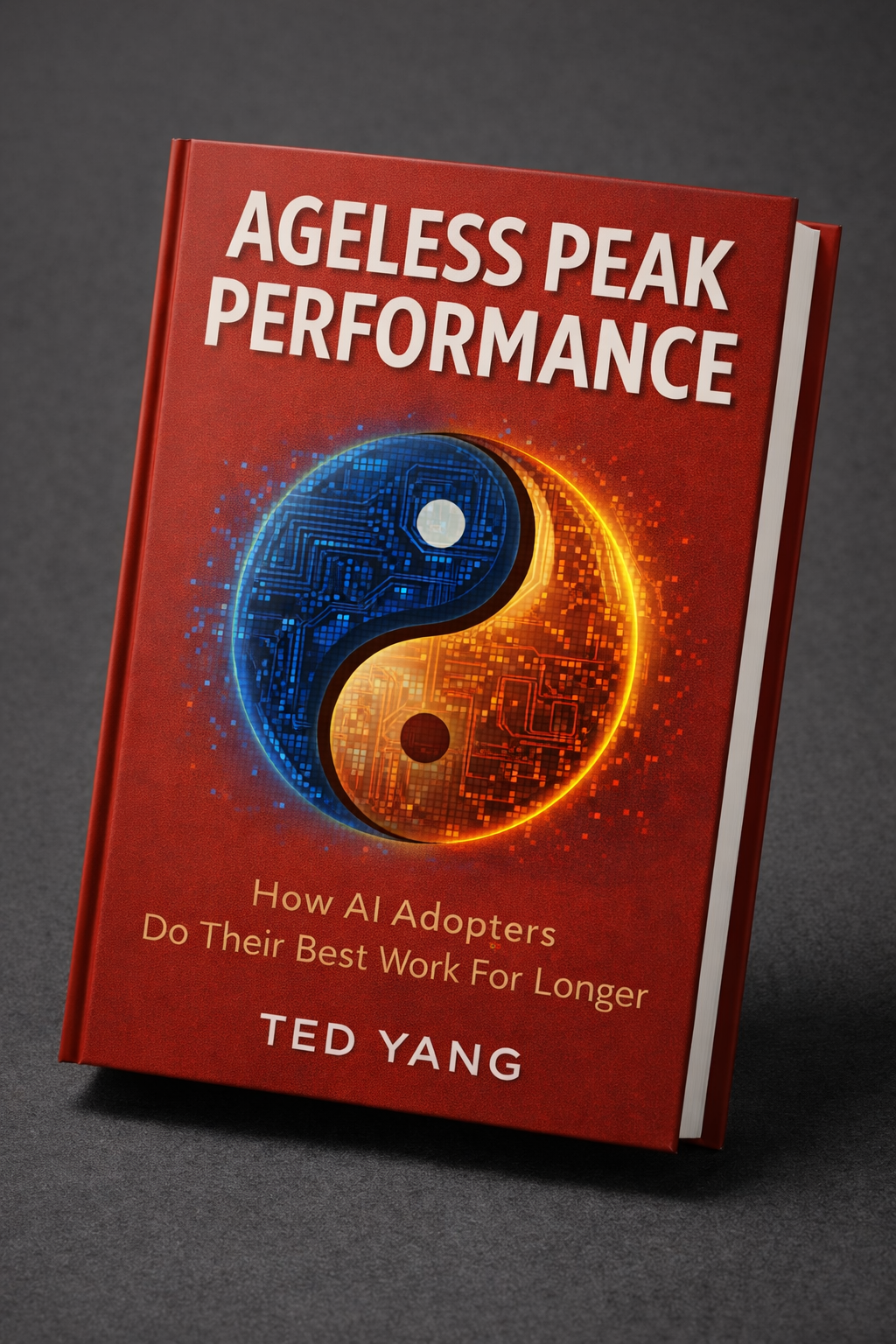
This is one AI teammate. The book shows you the whole team.
Ageless Peak Performance shows how to use AI as cognitive leverage: sharpening judgment, compressing learning curves, improving execution, and helping you and your team sustain excellence for decades.